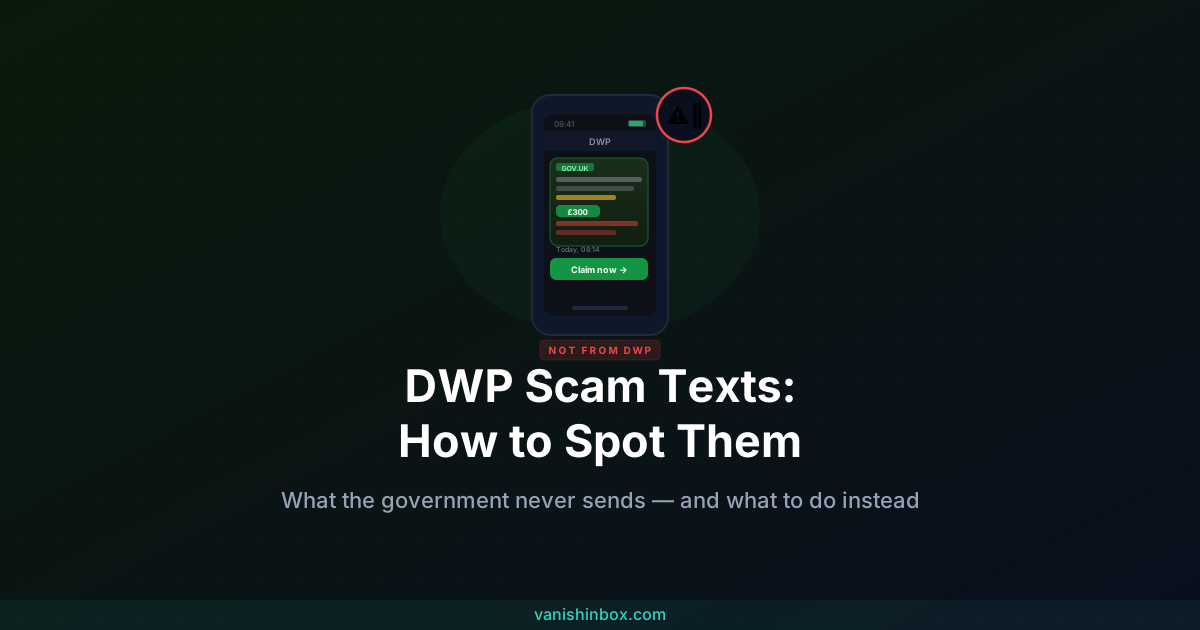
You receive a text from "DWP". It says you haven't submitted your application for the Winter Fuel Allowance and your payment of £300 is about to be cancelled. There's a link. There's a deadline — often the very next day. Act now or miss out.
It looks official. It uses the right language. And it is completely fake.
DWP impersonation scams have surged across the UK throughout 2025, with Merseyside Police alone recording 64 reports between June 2024 and July 2025 — half of those arriving in just the final two months of that period. The timing is deliberate: scammers exploit periods of genuine public uncertainty about benefit changes to make their fake messages land with more force.
This guide explains exactly how these texts work, what the real DWP does and doesn't send, and what to do if one lands in your inbox.
What Do DWP Scam Texts Actually Look Like?
The messages are more polished than most scam texts. They use formal language, reference real benefit names, and avoid the obvious grammar errors that usually give phishing attempts away. Here are real examples reported to councils and police forces across the UK in 2025:
"DWP Benefits Officers are in the process of issuing winter benefits. As you have not yet submitted an application for the 2024–2025 allowance, the payment cannot be completed. Please complete your application by the deadline of [date] as only eligible applicants will receive between £200 and £300 of allowance."
"According to DWP records: You have not yet submitted your application for Winter Heating Allowance 2025–2026. To ensure you receive your £300 payment, please complete your application before [date]. Failure to submit an application by the deadline will render you ineligible for the stipend."
Some versions also ask recipients to reply "Y" to activate a link, or request a £1 "bank verification" payment before the grant can be released.
The common variants all claim to offer:
- Winter Fuel Payment (£200–£300)
- Winter Heating Allowance
- Energy Support Scheme grants
- Cost of Living payment top-ups
The schemes referenced often don't exist in the form described, or have already closed — but most people don't know that, which is exactly the point.
Why These Texts Are So Convincing
Most people receive genuine texts from their bank, their GP, and government services. We're conditioned to act on them. DWP scams exploit that conditioning in several specific ways.
They use fear of missing out. The promise of £200–£300 is significant for anyone on a fixed income or benefits. The threat of missing it if you don't act creates real urgency — even if you wouldn't normally click a link in a text.
They time their attacks carefully. Scammers watch the news. Every time the government announces changes to Winter Fuel Payments, Universal Credit, or energy support, scam texts follow within days. The public uncertainty about who qualifies and how to apply makes the fake messages plausible.
They get the language right. These aren't "you have won a prize" texts. The phrasing mimics genuine government correspondence closely enough that recipients — including people who consider themselves alert to scams — get caught out.
They create a false deadline. Deadlines of the next day or two days away are designed to stop you from pausing, verifying, or asking someone else what they think. The urgency is manufactured.
What the Real DWP Actually Sends
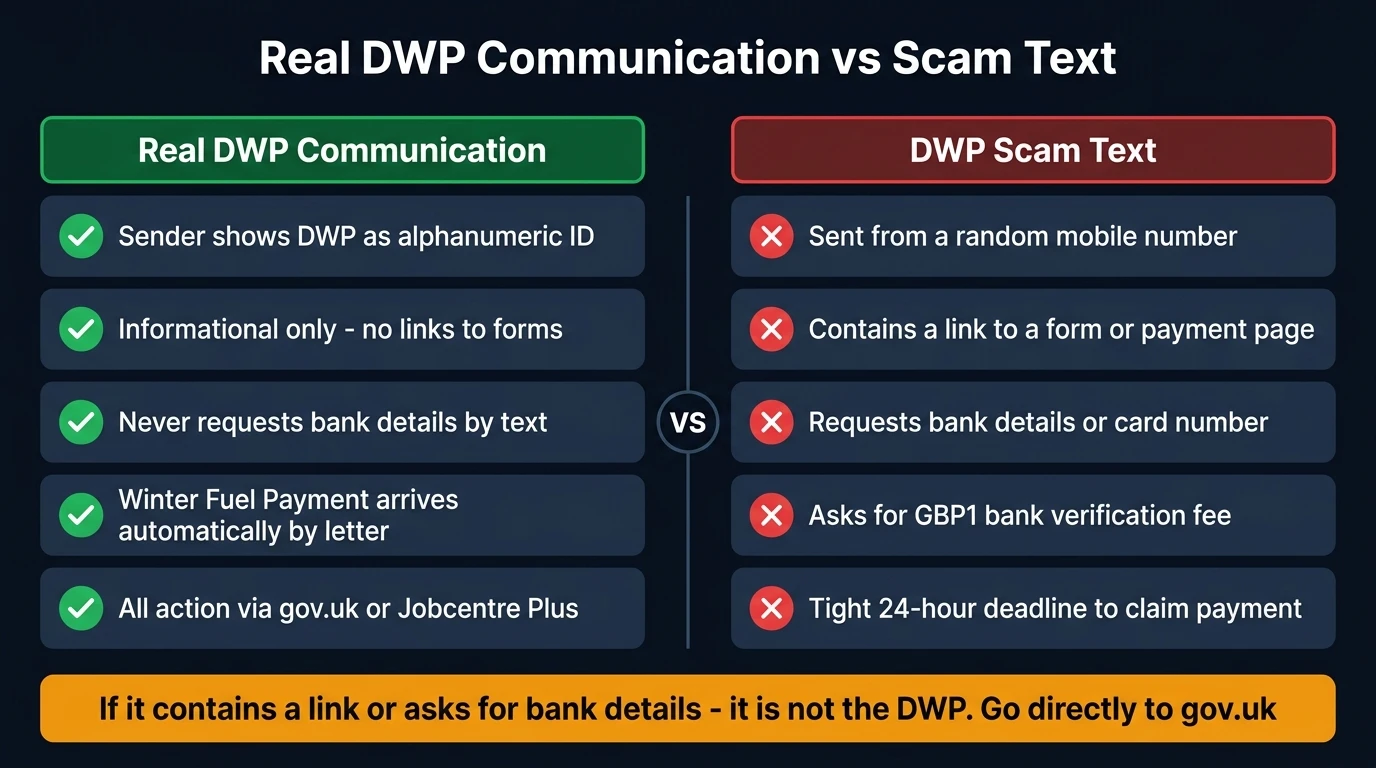
Understanding how the genuine DWP communicates is the single most useful thing you can learn from this article.
The real DWP does send texts — but only as reminders for appointments or to confirm that a document has been received. These texts are informational only. They do not contain links to forms. They do not ask for bank details. They do not ask you to apply for anything.
All real DWP action happens through official channels:
- Your Universal Credit online journal at gov.uk
- Letters sent to your home address
- Phone calls from numbers you can verify at gov.uk
- Face-to-face appointments at Jobcentre Plus
Winter Fuel Payments specifically — if you're eligible, you receive a letter in October or November confirming the amount, with payment made automatically in November or December. You do not need to apply via text, click a link, or make any payment to receive it.
If a text is telling you to apply for something, and you haven't received a letter about it, the text is not real.
The Red Flags to Look For
Run through this list when any unexpected government text arrives:
It came from a random mobile number. Genuine DWP texts show "DWP" as the sender ID, not a mobile number. Texts from numbers like +63 908 306 9627 or +44 744 709 4289 — both documented in 2025 scam campaigns — are fraudulent.
It contains a link. The DWP does not include links to forms or payment pages in text messages. Any link in a supposed DWP text is a phishing link.
It asks for bank details or a payment. The government will never ask you to pay a fee to receive a benefit. The £1 "bank verification" request is a common variation of this scam — it's designed to capture your card details, not to verify anything.
It has a tight deadline. Real benefit communications don't give you 24 hours to respond or lose your payment. Artificial deadlines are a pressure tactic.
It references a benefit you didn't apply for or know about. If you haven't heard of the scheme being referenced, that's not because you missed something — it's because the scheme often doesn't exist as described.
The link doesn't use a .gov.uk domain. All legitimate UK government websites use .gov.uk. Links using rebrand.ly, bit.ly, or any other URL shortener or unfamiliar domain are not government links.
What to Do If You Receive One
The right response is quick and requires no engagement with the message:
- Do not click any link and do not reply — even replying "STOP" confirms your number is active
- Forward the text to 7726 (SPAM) — free on all major UK networks, feeds directly into carrier fraud-blocking systems
- Report it to the NCSC — forward the text to [email protected]
- Report to Action Fraud — online at actionfraud.police.uk or by phone on 0300 123 2040
- Block the number and delete the message
- If you're unsure whether a benefit applies to you — go directly to gov.uk or call DWP using a number found on gov.uk, never one from the text
That's the complete response. Five minutes, no money lost, and a report filed that helps protect others.
What to Do If You Already Clicked or Shared Details
If you clicked the link but didn't enter any information, run a security scan on your device as a precaution. Most credible antivirus apps have a free scan option.
If you entered personal information — name, address, National Insurance number, date of birth — report to Action Fraud immediately and place a fraud alert with the credit reference agencies: Experian, Equifax, and TransUnion. This prevents scammers from opening credit accounts in your name.
If you entered bank or card details, or made the £1 verification payment, call your bank immediately. Ask them to flag the account for fraud and issue a new card. Banks are generally familiar with this scam and will act quickly. Keep a note of when you called and who you spoke to for the fraud report.
If you think your device may have been compromised by clicking a link, change your passwords from a separate, clean device — starting with your email account, then banking, then anything else.
Who Gets Targeted — and Why It Matters
These scams disproportionately target older adults and people on lower incomes — the same groups most likely to be legitimately receiving Winter Fuel Payments or energy support. Merseyside Police specifically noted that fraudsters are targeting vulnerable people, particularly older residents, during periods of transition in benefit eligibility.
This is deliberate. A £300 payment is more meaningful to someone on a fixed pension than to someone in full-time employment. The scammers know their audience.
If you have elderly relatives or neighbours who might receive these texts, passing on three simple rules can make a real difference: the DWP never texts with links, never asks for bank details by text, and never requires a fee to release a payment. Those three facts rule out every variant of this scam.
How Your Number Ends Up on the List
Like most SMS scams, DWP texts go to lists of phone numbers that have been harvested or purchased. These lists are often compiled by linking phone numbers to other data — email addresses, names, postcodes — using records from data breaches and data broker databases.
The more places your real contact details appear online, the more likely your number is on one of these lists. Using a disposable email address for sign-ups you're not certain about limits how much of your data enters that pipeline in the first place. VanishInbox generates a working temporary inbox instantly — no account needed — so your real email stays off the lists that eventually get sold to scammers. For a full explanation of how that data pipeline works, see what actually happens when a website sells your email address.
The overlap between email data and phone scams is real: once your email is in a broker's database, it often gets linked to your phone number and address through cross-referencing with other data sources. For a broader look at how spam reaches you across channels, see why your inbox is full of spam — and how to stop it forever. For the same tactics applied to fake loan offers by text, see how fake loan text scams like CNFI USA work.
Frequently Asked Questions
Does the DWP ever send texts with links?
No. Legitimate DWP texts are appointment reminders or document confirmations only. They do not contain links to forms or payment pages. Any text claiming to be from the DWP that includes a link is fraudulent.
I received a text from a number that says "DWP" — does that mean it's real?
Not necessarily. Scammers can spoof sender IDs, meaning a text can display "DWP" as the sender even when it comes from a fraudulent source. The content of the message matters more than the sender ID — if it contains a link or asks for personal details, it's a scam regardless of what the sender field says.
The text knows my name. Does that mean it's legitimate?
No. Scammers purchase or compile lists that include names alongside phone numbers. Your name appearing in a message does not mean it came from a genuine government source — it means your details have been sold or leaked at some point.
I clicked the link but didn't enter anything. Am I safe?
Possibly, but run a security scan on your device to be safe. Simply visiting a phishing site can in some cases deliver tracking code or attempt to exploit browser vulnerabilities. If your device behaves unusually afterwards, take it to a professional.
Can I get money back if I was scammed?
If you made a payment, contact your bank immediately. Many banks have fraud reimbursement policies, particularly where the scam impersonated a government body. Acting quickly significantly improves your chances. File a report with Action Fraud too, as this creates an official record that can support any dispute or reimbursement claim.
Is there a way to stop these texts arriving?
Forwarding each one to 7726 contributes to carrier-level blocking. Enabling spam filtering on your phone (iOS: Settings → Messages → Filter Unknown Senders; Android: Messages app → Settings → Spam Protection) catches many before they reach you. Neither method is perfect, but combining both reduces the volume significantly.
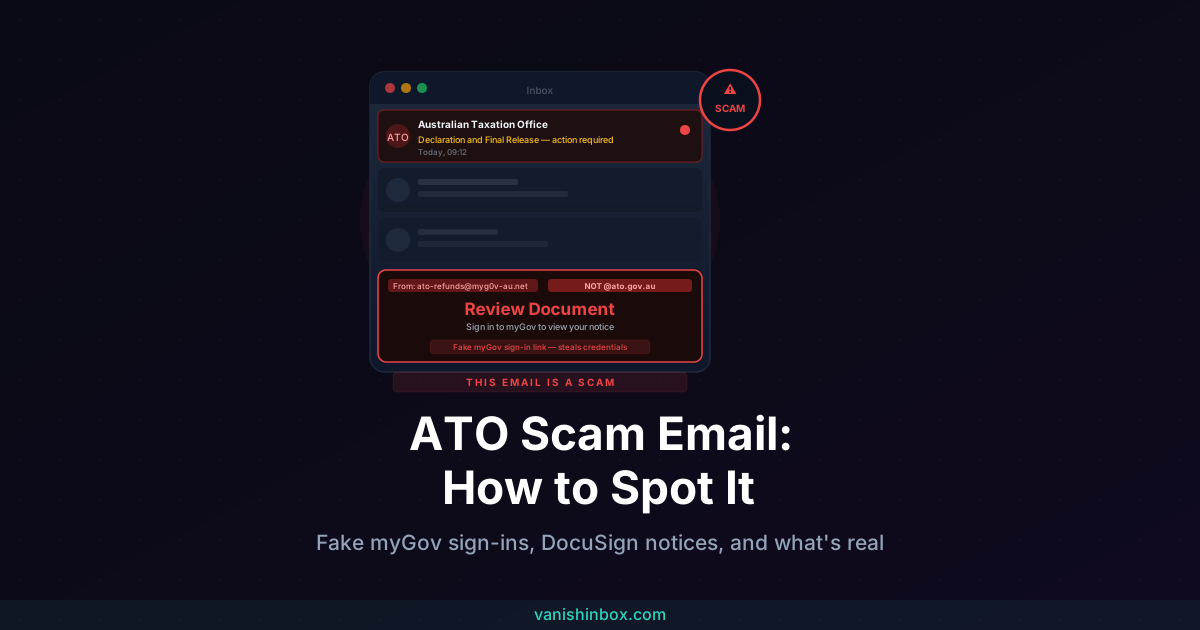
The same government-impersonation playbook shows up well beyond the UK. See the ATO scam email targeting Australian taxpayers for the identical urgency-and-brand-trust tactics applied to a different tax and benefits system.