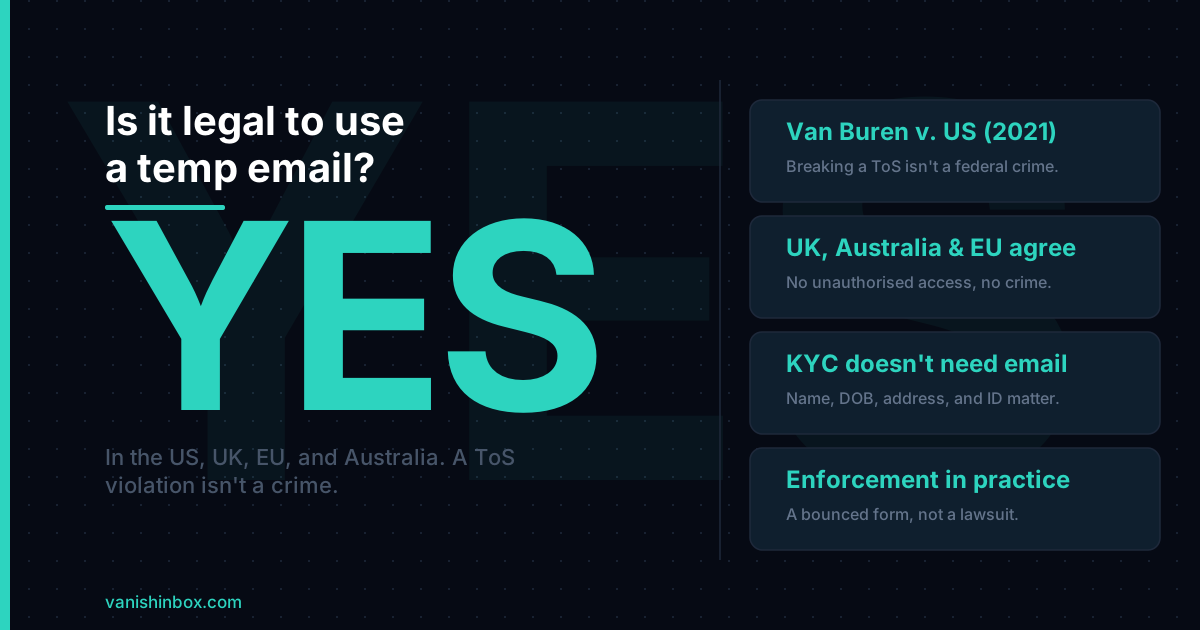
You type a temp email into a free trial signup, hit submit, and a small worry surfaces: is this against the law somewhere? It isn't. Using a disposable email address is legal in the US, UK, EU, and Australia. No statute requires you to hand a company your real inbox before it lets you download a PDF.
The question usually hides three separate worries: can a company ban you for it, can you get sued over it, or can it turn into a crime under some law you've never read. Each has a different answer, and the third one has a real Supreme Court case attached that most articles on this topic never mention. Legal and safe are different questions: is temp mail safe? covers the security side in full.
A Contract Isn't a Law
A company's Terms of Service is a private agreement you accepted by clicking a checkbox. It isn't legislation, and breaking it doesn't put you on the wrong side of any court. A ToS gives a company the right to suspend your account, blacklist your IP, or refuse your next signup. It doesn't give anyone the right to call the police.
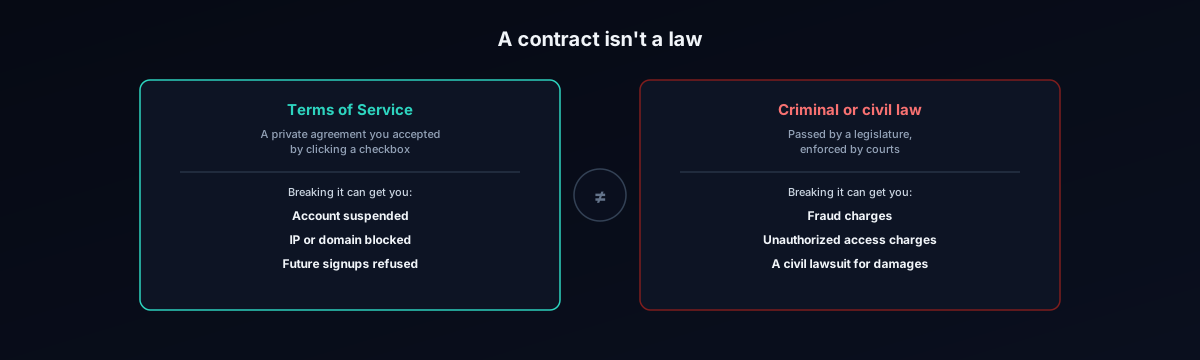
Every scary-sounding claim about temp email starts by blurring that distinction, treating "against the rules" as the same thing as "against the law." Most of this article traces back to keeping those two separate.
The Case That Settled This in the US
In 2021, the US Supreme Court ruled on a question that answers this one, even though the case had nothing to do with email. Van Buren v. United States asked whether a police officer broke federal law by searching a license plate database for personal reasons, using access he already had for work. Prosecutors argued that using an authorized system for the wrong purpose violated the Computer Fraud and Abuse Act, the main federal law covering unauthorized computer access. The Court disagreed. Breaking a usage policy on a system you're allowed to use isn't the same as breaking into a system you're not allowed to touch, and the CFAA only punishes the second one.
Apply that to a signup form. A disposable address doesn't get you into any part of a company's system you weren't supposed to reach. You fill out the same form as everyone else, and the site processes it the same way regardless of which domain sits after the @ symbol. Whatever the fine print says about accurate information, Van Buren draws a clean line: a website's private rules about how you use its form can get you banned, not prosecuted.
The UK Version: Why This Isn't Unauthorised Access
The UK runs on a different statute, the Computer Misuse Act 1990, and it draws a similar line from the opposite direction. The Act targets unauthorised access: someone getting into a system they had no right to enter, guessing a password, exploiting a flaw, or using stolen credentials. The Discord friend request scam covered on this blog, where an attacker ends up with a Remote Access Tool on someone's device, is exactly the kind of access the Act exists to punish.
Signing up for a service with a temp email doesn't fit that pattern. The website grants you an account. It sends the verification link because you asked for one, and it processes the signup because that's the form's whole job. Nobody forces a door open. A company might not like which address you used, but it opened that door itself.
Australia and the EU: Same Shape, Different Statute
Australia's Criminal Code Act 1995 runs on the same logic as the UK and US versions. Sections 477.1 and 478.1 criminalise unauthorised access to data protected by an access control system: a password wall, encryption, something the person had no right to open. A company processing a public signup form has no such wall in place. The form exists to be filled in by strangers, so there's no restricted data to access without authorisation in the first place.
The EU closes this question in the plainest terms of the three. Directive 2013/40/EU, the framework EU member states built their own computer crime laws around, says in its own text that a contractual restriction like a Terms of Service policy should not, by itself, turn access into a criminal offence. The people who wrote the law anticipated the exact confusion this article opened with and ruled it out inside the legislation.
Four Situations Worth Taking Seriously
Add a specific bad intention to the disposable address, and the picture changes. Four situations carry more weight than a routine ToS violation.
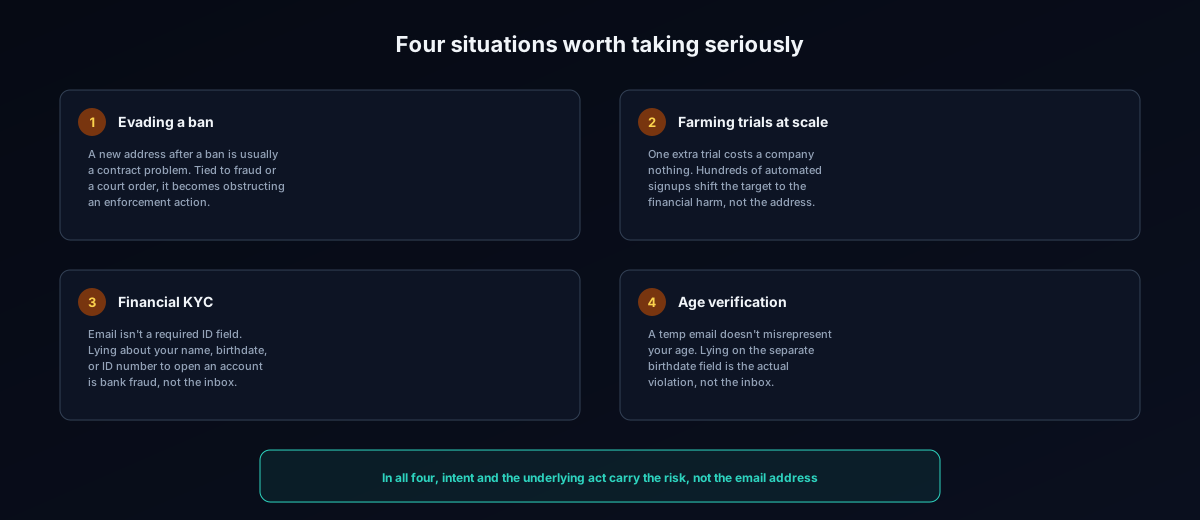
Evading a ban. Signing up again under a new address after a platform bans you is still a contract problem in most cases; the platform can ban the new account too. It gets more serious when the original ban was tied to fraud or a court order. At that point, getting around the ban means obstructing an enforcement action already aimed at you.
Farming trials and referral bonuses at scale. One signup with a temp address to grab a free trial costs a company nothing worth mentioning. Hundreds of automated signups built to farm referral bonuses or repeat trial periods sit in a different category. Courts weigh the financial harm to the company, not which email address filled the form, and large-scale abuse like this is where a prosecutor reaches for wire fraud or computer fraud charges instead of a rejected form.
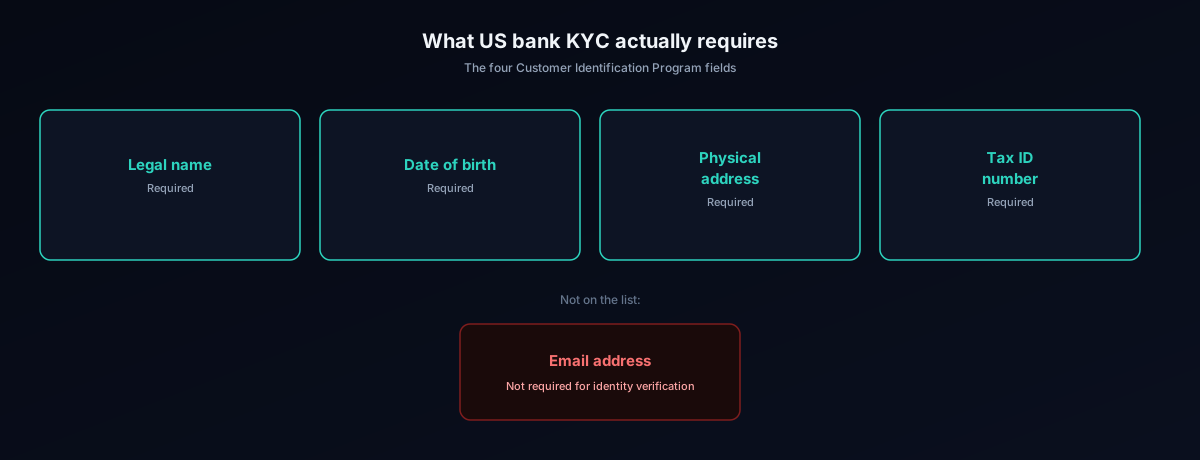
Financial KYC. This is where most guides on this topic get the law wrong. US banks operate under a Customer Identification Program mandated by federal law, and the required fields are your legal name, date of birth, physical address, and a tax ID number. Email address isn't one of them. A disposable inbox at a bank or crypto exchange never touches the part of KYC that carries legal weight. The risk sits in lying about your name, birthdate, or ID number to open a financial account. That's bank fraud under federal law, carrying a sentence measured in decades rather than a blocked signup. Your identity documents carry the risk here, not your inbox.
Age verification. Using a temp email for something age-gated doesn't misrepresent your age on its own. The signup form asks for a birthdate in a separate field, and lying there is the real violation, tied to what you typed into that field rather than to the inbox that received the confirmation.
Enforcement in Practice: A Bounced Form, Not a Lawsuit
Real-world enforcement almost always stops well short of anything above. A site that detects a disposable domain either rejects the signup outright or lets it through and blacklists the address once abuse shows up later. Why does this website reject my temp email? covers the detection side in full, and why companies hate disposable emails covers the financial and technical reasons a site bothers detecting them at all. Most temp email use ends there: a bounced form or a banned account, not a call from a regulator.
GDPR: What It Says
GDPR regulates companies, not individuals. It doesn't grant permission for anything you do, and it doesn't ban anything you type into a form. It asks companies to collect only the data a task needs, a principle called data minimisation. A disposable address for a one-time download fits that principle better than a permanent inbox a company never needed in the first place. GDPR doesn't create a personal right to use temp mail, but it happens to reward the same behaviour the regulation asks companies to practice on their end.
Keep Your Real Address for These
None of this argues for a throwaway address everywhere. Banking, healthcare, government services, and anything you'll need to prove your identity against later all need a real, permanent inbox, since password resets and account recovery depend on an address you can still reach a year from now. The one rule that keeps your inbox permanently clean covers where that line sits.
Frequently Asked Questions
Can I get in trouble for using a fake email to sign up for something?
Almost never beyond an account ban. A normal signup with an address that isn't your daily inbox doesn't cross into anything illegal in the US, UK, EU, or Australia.
Is it illegal to use a temp email to get a second free trial?
No, not for one extra trial. Automating hundreds of signups to farm bonuses moves toward fraud, and the harm to the company, not the email address, is what a prosecutor looks at.
Can a company sue me for using a disposable email address?
Rarely. A lawsuit needs damages, and a single signup with a temp address produces close to none. Companies handle this through account suspension, not litigation.
Does using a temp email affect KYC or bank account verification?
Email address isn't part of the required Customer Identification Program fields: legal name, date of birth, physical address, and tax ID number. Misrepresenting those fields is the real risk, not the inbox you used to receive a confirmation.
Am I violating the Computer Fraud and Abuse Act by using a fake email on a signup form?
No. Van Buren v. United States established that breaking a platform's usage rules isn't the same as the unauthorized access the CFAA punishes.
Is using a temp email illegal in Australia or the EU?
No. Australia's Criminal Code Act 1995 only criminalises access to data protected by an access control system, and a public signup form doesn't count. The EU's own cybercrime directive says, in its own text, that a Terms of Service violation alone shouldn't create criminal liability.
Does GDPR give me a right to use a temp email address?
Not in a formal sense. GDPR regulates what companies collect, not what you're allowed to type into a form. Its data minimisation principle points the same direction temp email does, without creating a personal legal right to it.
None of this changes with the country you're signing up from. VanishInbox generates a working address in seconds, and nothing about that process looks any different to a court, a regulator, or a compliance team than an ordinary signup. If you're weighing VanishInbox against other providers first, the best disposable email services in 2026 covers how they compare.