Around 3.4 billion phishing emails are sent every single day. That's roughly 39,000 per second, and the number climbed throughout 2024 and into 2025. If you're wondering whether a disposable email address can do anything about that, the answer is yes — but not in the way the question usually implies.
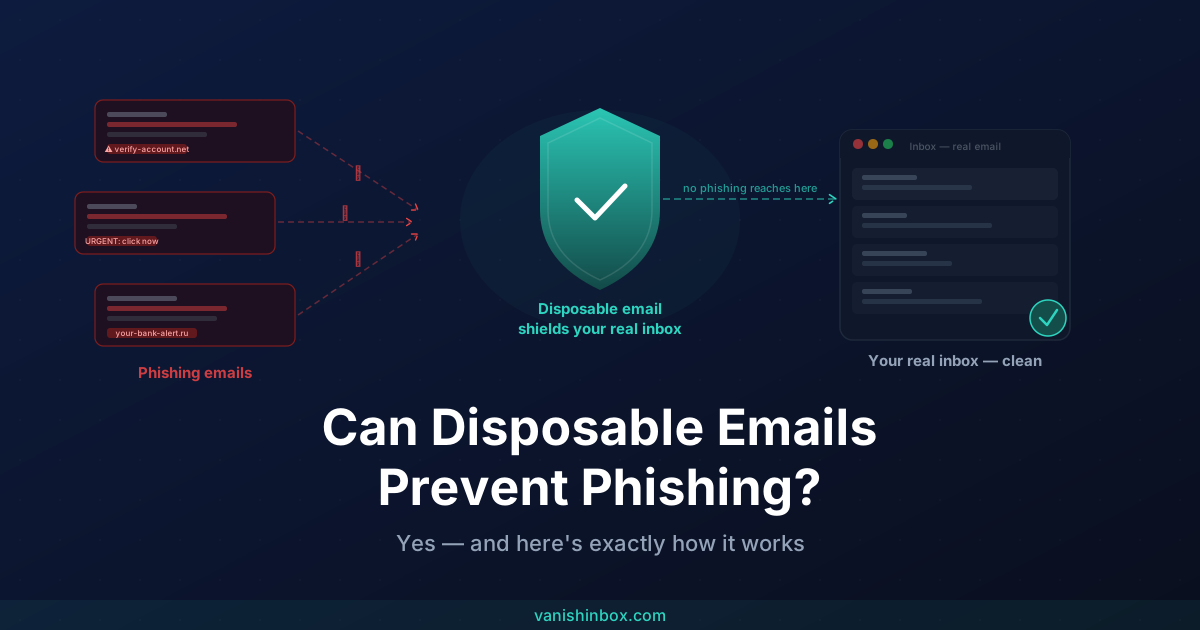
Disposable emails don't filter phishing out of your inbox. They do something more valuable: they stop your real email address from entering the systems that fuel phishing campaigns in the first place. That distinction matters, and understanding it tells you exactly when a disposable address will protect you and when it won't.
How Phishing Campaigns Actually Get Your Address
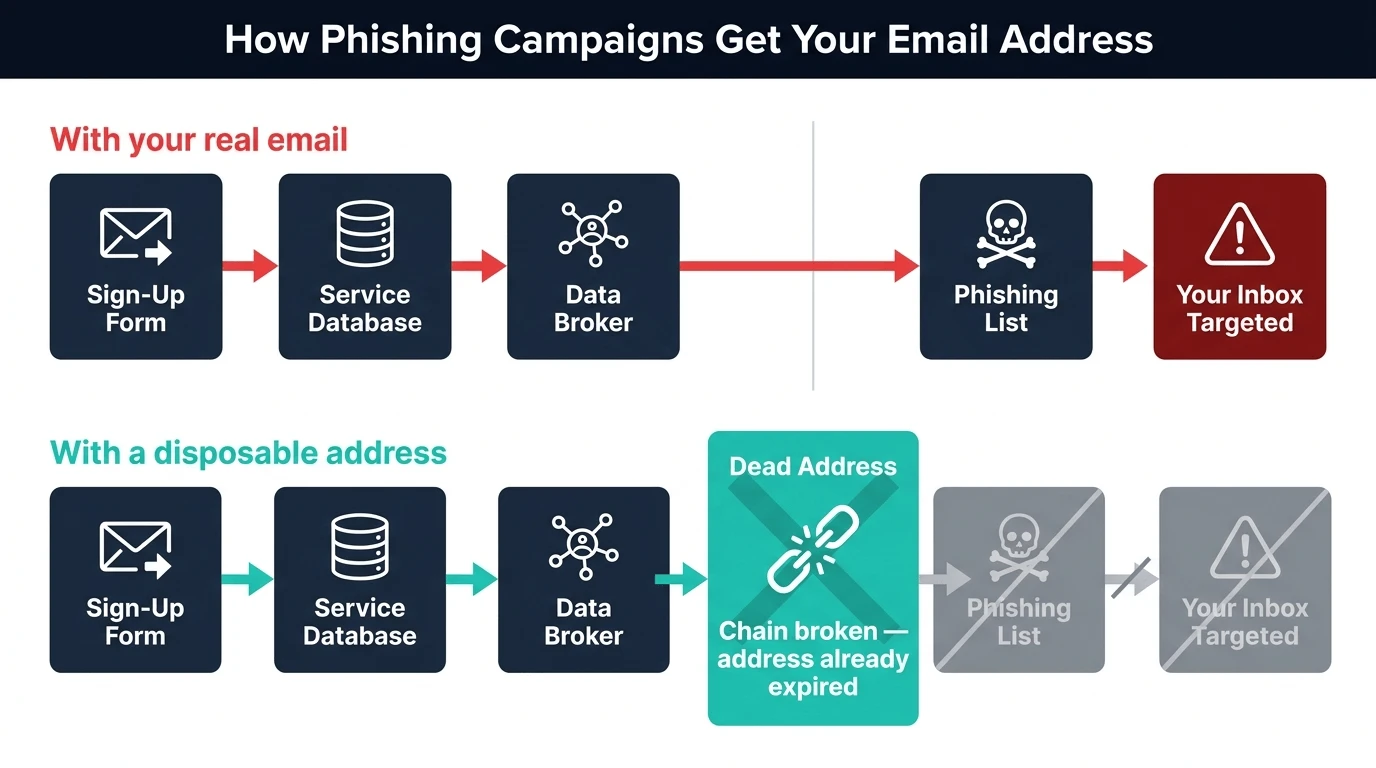
Most people picture phishing as random — mass emails blasted into the void, hoping someone clicks. Some of it is. But the majority of targeted phishing works from lists, and those lists come from specific, identifiable sources.
Data breaches are the single biggest feeder. Research shows that 81.9% of phishing victims had their email addresses leaked in a previous data breach before they were targeted. Your address doesn't need to have leaked from your bank. It could have come from a recipe website you used once in 2018, a forum you signed up to and forgot, or a free trial from a service that was later acquired and had its user database sold.
Data brokers are the connective tissue. When you sign up to a website, your email often flows almost immediately into a data broker database — a company whose entire business is aggregating personal information and reselling it. From there, it gets sold to marketers, advertisers, and, less legitimately, the people building phishing campaign lists. Each additional database your address lives in is another potential breach point and another opportunity for it to reach the wrong hands. For the full picture of how this pipeline works, see what actually happens when a website sells your email address.
Tracking pixels in marketing emails quietly confirm that your address is live. When you open a marketing email, a 1×1 invisible image fires a request to the sender's server. That request logs your IP address, your device, and — most importantly for phishing operators — that the address is active and monitored by a real person. An active address is worth more than a dormant one. For a detailed breakdown of how this mechanism works, see how companies track you through your email.
The result is a well-documented pattern: the more sign-ups you've made with your real email, the more databases it lives in, the more likely it is to appear on a phishing list.
What a Disposable Email Actually Does
A disposable email address creates a dead end. When you sign up for something with a temp address, your real email never enters that service's database. If their database is breached, your real address isn't in it. If they sell their user list to data brokers, your real address isn't on it. If they start sending phishing-adjacent spam, it goes to an inbox that no longer exists.
This is what Privacy International describes as protection from "unwanted spam and phishing attempts in your personal inbox, online tracking, and other forms of data abuse" — stronger digital self-defence than handing your real address to every service you encounter.
A few specific protections are worth naming clearly:
Breach immunity. If a website that has your temp address gets hacked, the leaked address is already expired. Attackers can't use it to reach you, and there's no profile attached to it connecting that address back to your identity.
Data broker dead-end. Even if a website sells your temp address immediately after sign-up, the address ceases to exist before any targeting campaign can run. The data broker now holds a dead address that points to nothing.
Profile isolation. Each temp address you use is isolated. There's no thread connecting your use of one service to your use of another. You're not building a cross-site profile that can be aggregated and sold as a unified identity.
Tracking pixel neutralisation. If you use a VanishInbox address to sign up for something and then receive a marketing email in that inbox, any tracking pixel that fires connects to a dead address — not to your real identity, your IP history, or your location.
Wikipedia's entry on disposable email addresses notes that, used properly, they can serve as a tool for spotting fake messages or phishers: if you receive a message claiming to be from your bank at a temp address you only ever used to download a PDF, it's immediately obvious something is wrong.
What Disposable Emails Cannot Do
This is where the honest answer gets important, because overclaiming gets people into trouble.
They don't retroactively protect your real address. If your main email is already in 200 databases, a temp address going forward helps, but it does nothing for the exposure that already exists. Phishing that targets your real address will continue regardless of what you use for new sign-ups.
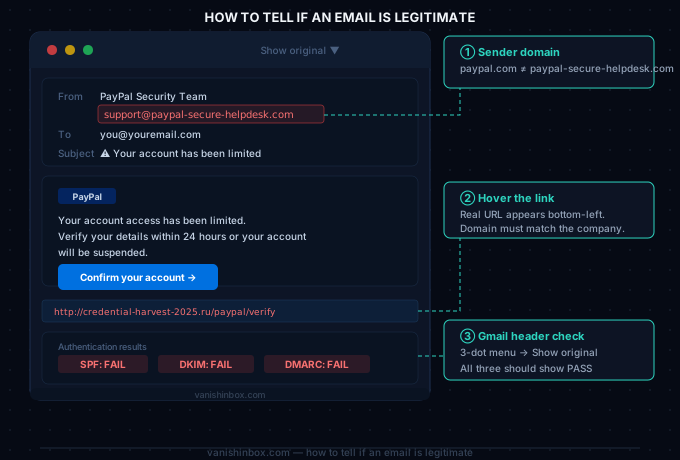
They don't stop you from clicking bad links. The median time between a phishing email arriving and the recipient clicking the link is 21 seconds. That's a human behaviour problem, not an address problem. A temp inbox can receive a phishing email just as easily as a real one — if you click a malicious link inside it, the same harm applies. Recognising the patterns phishers use is a separate skill worth developing; see how to spot a phishing email for the specific signs.
They don't protect credentials you've already entered. If a phisher has your login details for a site because you fell for an attack previously, the address you use going forward is irrelevant to that compromised account.
They don't replace other security layers. A temp email addresses one specific risk: your email address appearing in systems it shouldn't. Password managers, two-factor authentication, and the habit of checking sender addresses before clicking are still necessary. None of these substitute for each other.
One other thing worth stating plainly: disposable email addresses are also used by bad actors. Phishers themselves use temp addresses to send campaigns and then discard the address before anyone can trace them. This is a misuse of the same infrastructure, and it's why some security teams treat incoming emails from known disposable domains with extra scrutiny. Using a temp address to protect your inbox is entirely legitimate; understanding that the tool works both ways gives you a clearer picture of the landscape.
The Threat Disposable Emails Were Built for
Phishing is not one thing. It spans mass campaigns with poor grammar hoping for a low percentage response rate, through to highly targeted spear phishing that uses your name, employer, and recent transactions to seem credible. The latter kind depends on data.
Spear phishing attackers don't guess. They buy lists. They search breached databases. They aggregate profile data from data brokers. The sophistication of the attack scales with the quality of the data they have on you. A phishing email that includes your full name, your city, and a reference to a recent purchase is more convincing than a generic "Dear Customer" attempt — and that personalisation comes from the same data ecosystem that builds from your email sign-ups.
Reducing how many databases hold your real address doesn't make you invisible, but it meaningfully limits the material available for that kind of targeted attack. The fewer places your address appears, the less data exists to build a convincing impersonation.
Consider the numbers. Spam accounted for nearly 45% of all global email traffic in 2025. The majority of phishing campaigns work from purchased or leaked lists. Each additional database your real address lives in is a potential source for those lists. A consistent habit of using temp addresses for untrusted sign-ups shrinks the surface area across which your real identity is exposed.
When to Use a Disposable Address and When Not To
Applying this in practice comes down to a simple question before any sign-up: do I need a long-term relationship with this service?
Use a disposable address for:
- Free trials you're exploring
- One-time downloads or gated content
- Competitions, giveaways, and prize draws
- Any site you're visiting for the first time and aren't sure you'll return to
- Newsletter sign-ups from unfamiliar publishers
- Verifying an account you only need once
Use your real address for:
- Banking and financial accounts
- Government services, healthcare, or anything legally significant
- Accounts where you'll need password recovery
- Services you use regularly and have a genuine relationship with
- Professional or work-related accounts
Consider hardware wallet purchases too. Ledger's 2020 data breach exposed over a million customer email addresses, and scammers have been running phishing campaigns against those customers ever since. Using a disposable address when buying a Ledger device means your real email never enters the retailer's database — so when that database is breached, you are not on the list that fuels the follow-on scam campaigns. For everything that campaign involves, see the Ledger email scam explained.
The underlying rule is the same one that keeps your inbox permanently clean over time: your real address is for relationships that matter, everything else gets a throwaway. For the full framing of that habit, see the one rule that keeps your inbox clean.
Disposable Email as a Layer, Not a Solution
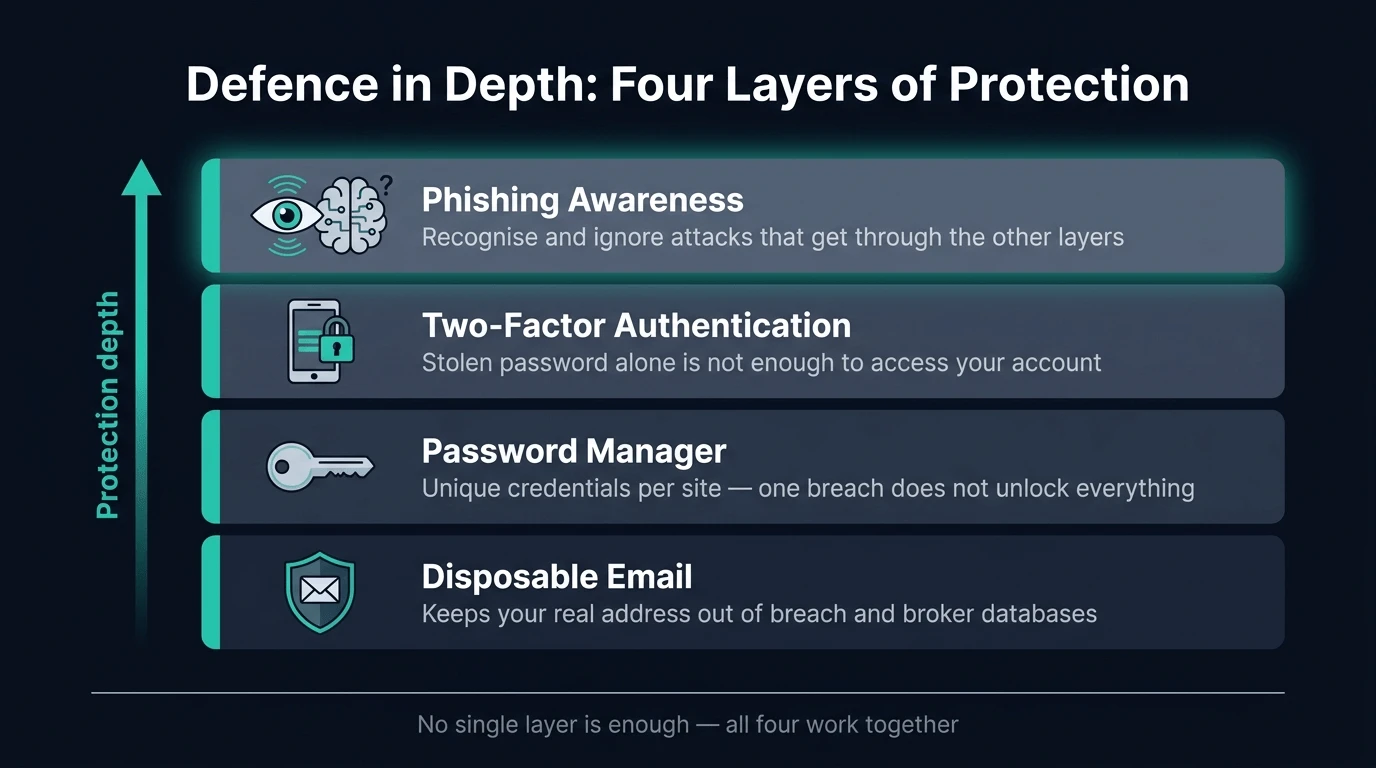
Security professionals consistently make the same point: no single tool prevents phishing. The attacks succeed because they combine technical manipulation with human psychology — urgency, fear, impersonation of trusted brands. Countering that requires multiple layers working together.
Modern phishing protection advice points to email filtering, browser-level protection, multi-factor authentication, and user awareness as the core components. Disposable email sits in the prevention layer — reducing how widely your real address circulates before an attack can target it.
Combined with the other habits, the picture looks like this:
A disposable address stops your real email from entering databases it doesn't need to be in. A password manager ensures that even if one account is compromised, the same credential doesn't unlock every other account. Two-factor authentication means a stolen password alone isn't enough to gain access. And knowing what phishing emails look like means you're less likely to click when one does reach you. For a broader look at how these pieces fit together, see how to protect your personal information online.
Each layer reduces the probability and the impact of a successful attack. Disposable email handles a specific and well-defined piece of that: keeping your real address out of the breach-and-sell pipeline that feeds phishing campaigns.
The Bottom Line
Yes, disposable emails can prevent phishing — specifically by preventing your real address from entering the data ecosystem that supplies phishing campaigns with their target lists. That's a meaningful, real protection. Around 82% of phishing victims were targeted using an email address that had already appeared in a data breach. Reducing how many databases your real address lives in directly reduces the likelihood of being on those lists.
What a disposable address can't do is stop phishing that targets an address you've already distributed, protect you from clicking a malicious link once an email arrives, or replace the other layers of security that good practice requires.
Use VanishInbox for any sign-up where you don't need a long-term relationship with the service. Generate a free address in seconds, receive the verification, and walk away knowing your real inbox stays out of that system entirely. For everything else — the accounts that matter, the services you genuinely trust — your real address remains where it belongs: reserved for things worth sharing it with.
Frequently Asked Questions
Can a phishing email be sent to a disposable address?
Yes. There's nothing about a temp address that prevents emails from arriving in it during its active window. The protection is upstream — because your real address never entered the sign-up database, you're less likely to be targeted in the first place. If a phishing email does arrive in a temp inbox, the same rule applies: don't click links you didn't expect, and check the sender carefully before acting on anything.
Does using a disposable email make me anonymous?
Partially. It removes your email address from the equation, but IP addresses, browser fingerprinting, and cookies all still identify you regardless of which email you use. For the full breakdown of what temp email hides and what it doesn't, see can temporary email be traced?
What happens if a site I used a temp address for gets breached?
The leaked address is already expired. Even if it's published in a breach dataset or sold to a phishing operator, they can't use it to reach you. No messages will be delivered to it, and there's no profile attached to it that connects the address back to your real identity.
Can disposable emails help protect against spam too?
Yes, and this is arguably the more immediate day-to-day benefit for most users. Because the address expires and carries nothing back to your real inbox, marketing emails, promotional sequences, and spam targeting that address all go nowhere. For the full picture of why inboxes fill with spam and how to structurally prevent it, see why your inbox is full of spam and how to stop it.
Are there situations where a disposable email creates risk?
One specific situation: if you use a temp address for an account you intend to keep and later need to reset your password, the recovery email no longer exists. You'll be locked out of the account. Use disposable addresses only for sign-ups where you don't need long-term access, or update your email to a real address in account settings immediately after creating the account.